
Residential aged care · Retirement villages · Respite
Aged Care Facility Cleaning in Melbourne
Aged care facility cleaning in Melbourne for residential homes and retirement villages that need more than a standard contract cleaner. We clean resident rooms, ensuites, dining rooms, lounges and staff areas on a roster built around meals, medication rounds and rest, follow your outbreak plan when gastro or flu arrives, and hand over a dated record of every room we touch.
- Every cleaner cleared before day one
- Rosters built around meals and rest
- Same-day outbreak step-up
- Logs ready for your quality file
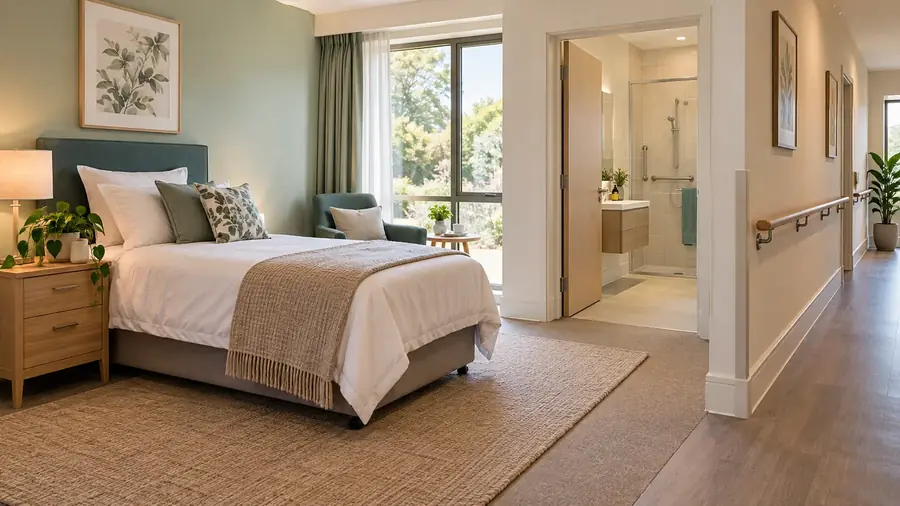
At a glance
- Best for
- Residential aged care homes, respite units and retirement villages
- Rosters
- Day shifts, split shifts and night floor care
- Outbreaks
- Extra hours and chlorine step-up from the day a case is confirmed
- Records
- Shift logs by wing, weekly spot checks, monthly summary
Facility work is where most of the risk sits. A resident room is a bedroom, a bathroom and sometimes a clinical space all at once, and the people living in it catch whatever is circulating in the building more easily than the staff around them. That shapes how we plan every site: which rooms come first, which cloths go where, who on your team we report to, and what changes on the morning a gastro case is confirmed. Each part of the job is set out below. If you are also arranging help for a parent living at home, start with our overview of aged care cleaning across Melbourne.
Scope
What does aged care facility cleaning in Melbourne cover?
Aged care facility cleaning in Melbourne covers every space residents and staff use each day: resident rooms and ensuites, dining rooms and serveries, lounges, corridors, lifts, reception, staff rooms and dirty utility rooms, each on its own frequency and worked in a fixed clean-to-dirty order.
Most homes we walk through have between two and six wings, and no two wings run the same day. A memory support unit may need its lounge done twice before lunch, while a wing of fairly independent residents might ask us to knock and come back later. We write those differences into the roster instead of cleaning every room the same way.
Inner-city sites work differently again. An aged care centre in the Melbourne CBD or Southbank is often a multi-storey building with one service lift, a loading dock shared with other tenants and set hours for trolleys in public corridors. Our aged care centre cleaning services there are planned around lift bookings and quieter times, and the aged care centre cleaner on each floor works from a smaller caddy so the lift is never tied up for long.
- Resident roomsBeds, bedside tables, wardrobes, call bells and floors.
- EnsuitesBasins, taps, rails, showers, toilets and non-slip mats.
- Dining and serveryTables, chairs, bench tops and floors after each meal.
- Lounges and activity roomsChairs, remotes, games tables and window sills.
- Corridors and liftsHandrails, lift buttons, door handles and floors.
- Reception and visitorsEntry glass, the sign-in desk and visitor toilets.
- Staff areasTea room, lockers, change rooms and nurse stations.
- Dirty utility roomsPan rooms, sluice sinks, bins and trolley bays.
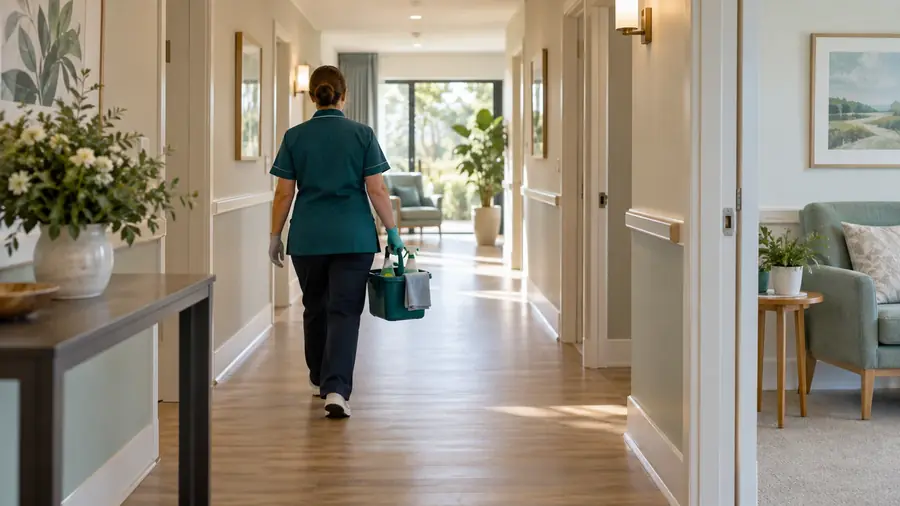
- Call bell and bed rails wiped
- Bedside table and over-bed tray cleaned around personal items
- Wardrobe handles and light switches
- Ensuite rails, taps, flush button and shower chair
- Floor mopped and left dry
Resident rooms
How are resident rooms and ensuites cleaned?
Resident rooms and ensuites are cleaned from the door inwards and from top to bottom: hands first, then high surfaces, touch points and furniture, the ensuite basin and shower, the toilet with its own cloth, and last of all the floor, worked back towards the door.
We treat each room as the resident's home. Photos, cards and ornaments stay where they are, and anything moved for dusting goes back exactly as it was. Cleaners knock, wait and introduce themselves, and if a resident would rather we returned later, we do. Rooms showing a contact-precautions sign get fresh cloths and a separate waste bag, and are left until the rest of the wing is finished.
Ensuites carry the highest touch counts in the room. Grab rails, tap handles, the flush button and the shower chair are wiped on every visit, not only the surfaces that look dirty. Shower floors are rinsed free of soap film, because a slippery tile is a real falls risk for someone who is already unsteady on their feet.
Our residential aged care cleaners work the same wings week after week wherever the roster allows. Residents come to know a face rather than a uniform, and cleaners learn who likes the blinds half open or the radio left on. New starters complete a site induction and shadow a full shift before they work a wing alone.
Shared spaces
How do you clean common areas and dining rooms?
Common areas and dining rooms are cleaned between uses rather than by the clock: tables and chairs after every meal service, lounges once activity sessions end, and corridors, lifts and reception on timed touch rounds that run through the whole day.
Dining rooms and serveries
Crumbs cleared from chair seats and frames, tables wiped with a food-safe detergent, spills mopped straight away. Serveries only ever see green-coded cloths.
Lounges and activity rooms
Remote controls, chair arms, puzzle tables and the tea trolley pass through many hands in a morning, so they join the touch round with lift buttons and rails.
Reception and entry
Front doors, the sign-in desk, hand sanitiser stations and visitor toilets get extra attention, since coughs and colds from outside arrive here first.
Dining rooms are the busiest shared space in any home and the one families notice first, so we never leave a spill for the evening clean. Lounges are done quietly and in sections, which means residents who stay in their chairs are not moved on so a cleaner can finish faster.
Clean and dirty zones
What are clean and dirty zones in aged care?
Clean and dirty zones divide a home by how likely each area is to carry germs. Cleaners move from clean areas such as lounges towards dirty ones such as toilets and pan rooms, and use colour-coded cloths and mops so nothing from a dirty zone ever reaches a clean surface.
Most Australian aged care homes run a four-colour code, and we adopt whichever version your site already uses. The rule is simple enough to check at a glance: a red cloth has only ever touched a bathroom.
| Colour | Used for | Never used on |
|---|---|---|
| Red | Toilets, urinals and bathroom floors | Basins, kitchens or resident furniture |
| Yellow | Isolation and contact-precaution rooms | Any other room, even in the same wing |
| Blue | Lounges, offices, corridors and other low-risk areas | Bathrooms or food areas |
| Green | Kitchens, serveries and dining surfaces | Anywhere outside food areas |
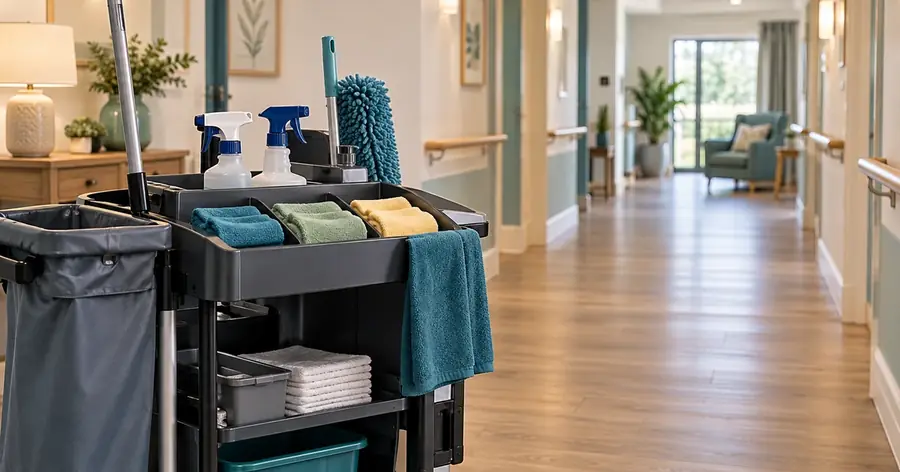
Dirty utility rooms, sluices and pan rooms always come last on a shift, and our trolleys keep fresh and used cloths in separate sealed compartments. The full method, including spills and body-fluid clean-up, is in our guide to environmental cleaning in aged care.
Outbreak response
What happens during an outbreak or gastro case?
During an outbreak we switch to your home's outbreak plan on the same day: more hours on site, touch rounds at least twice daily in affected areas, a chlorine-based disinfectant for gastro, affected rooms cleaned last with fresh equipment, and a separate log for your infection prevention and control lead.
- 1
Case confirmed
We agree the affected rooms with your IPC lead, set up a separate trolley and brief every cleaner on that wing before they start.
- 2
While it runs
Touch points in affected areas are cleaned at least twice a day, detergent first and then a chlorine-based product.
- 3
Until it closes
Outbreak cleaning carries on until 48 hours after the last resident's symptoms stop.
- 4
Final clean
Affected rooms, privacy curtains and soft furnishings get a full clean as your plan directs, then the outbreak log is handed over.
Gastro cleaning in aged care is less about stronger chemicals than about order and timing. A disinfectant does its job only once the grime is off, and only while the surface stays wet for as long as the product label says, so we build that waiting time into each room instead of wiping and moving on. Many common sanitisers do very little against norovirus, which is why chlorine is the default during gastro outbreaks.
These steps follow the Victorian Department of Health's guide to managing gastro outbreaks in aged care. Where your own outbreak plan asks for more, your plan wins.
Kitchens
Do you clean aged care kitchens?
We clean aged care kitchens and serveries, working to the kitchen's own food safety program. Victorian aged care kitchens are Class 1 food premises, the highest-risk category, so our cleaning slots into the program your cook or catering manager already runs rather than replacing it.
What our cleaners do
- Floors, walls and splashbacks
- Exhaust canopies and hood filters
- Cool room and dry store floors
- Bins and bin bays
- Deep cleans of benches and equipment outside service times
What stays with kitchen staff
- Food contact surfaces during service
- Sanitising boards, utensils and slicers
- Food storage and temperature records
- Any task the food safety program assigns to food handlers
Class 1 premises must register with their council each year and keep a written food safety program, as set out on the Department of Health's food business requirements page. Aged care commercial kitchen cleaning is usually quoted separately from the daily roster, since it tends to run at night or between services.
Retirement villages
How is cleaning different in retirement villages?
Retirement villages need less clinical cleaning and more front-of-house care. Residents live independently in their own units, so we clean the shared spaces the village owns on a set weekly roster, and clean individual units only when a resident books and pays for it.
| Question | Residential aged care | Retirement village |
|---|---|---|
| Who we report to | Facility manager and IPC lead | Village manager or residents' committee |
| What we clean | Rooms, ensuites, dining, clinical and staff areas | Clubhouse, pool, gym, library, corridors and lifts |
| How often | Daily, often across several shifts | Set days each week |
| Outbreaks | Follow the home's outbreak plan | Extra cleans of shared areas on request |
| Billing | Monthly contract with the provider | Village fee, with unit cleans billed to residents |
Plenty of Melbourne sites now combine both on one campus, with a care home beside independent units. Aged care and retirement cleaning can run under one roster with separate reporting, so the village committee and the care manager each see only their own records.
Records and audits
What cleaning records and audits do you provide?
You receive a dated shift log for every wing, spot-check results with any faults written down, a separate log whenever an outbreak runs, and a monthly summary, all laid out so a facility manager can file them straight into evidence for the Aged Care Quality Standards.
Records only help if they are honest. Our team leads spot-check a sample of rooms each week against a short list and note what failed as well as what passed. Anything outside our scope, such as a loose handrail or a stained carpet, goes down as a maintenance note so it reaches the right person.
Assessors from the Aged Care Quality and Safety Commission look for this kind of evidence under Outcome 4.1 on the environment and Outcome 4.2 on infection control. Our cleaning standards guide and spot-check list shows the full checklist we work from.
Most managers compare our written scope and sample records with their current contract line by line, which is what we want. Aged care facility cleaning services are easiest to judge on hours, areas and records rather than on one monthly figure.
| Item | Result |
|---|---|
| Rostered shifts completed | 62 of 62 |
| Rooms spot-checked | 48 |
| Items failed, fixed the same day | 3 |
| Outbreak days logged | 4, west wing |
| Maintenance notes raised | 5 |
| Chemical register updated | Yes |
- Shift logs by wing, dated and initialled
- Weekly spot-check sheets, failures included
- A separate log for each outbreak
- Monthly summary with maintenance notes
Site assessment
How do you request a site assessment?
Request a site assessment by sending the form with your home's suburb, bed numbers and current cleaning hours. We book a walk-through with your facility manager, then send back a written scope, roster and price for you to compare against your current contract.
- 1Send the detailsBeds, wings, shifts you run now and anything that is not working.
- 2Walk every wingWith your facility manager and, if possible, your IPC lead.
- 3Written scope and rosterAreas, frequencies, products, outbreak step-up and the monthly price.
- 4Start, then reviewA check-in after two weeks to adjust anything the roster got wrong.
No lock-in contract and no charge for the walk-through. You can also get a quote through the contact page if you would rather start by email.
FAQ