
Guides · For facility teams and families
Aged Care Cleaning Guides for Care Homes and Families
These aged care cleaning guides are free, practical references for the people who clean, plan and check residential aged care in Melbourne: what to clean and how often, how to handle spills, and what the Quality Standards expect to see in your records.
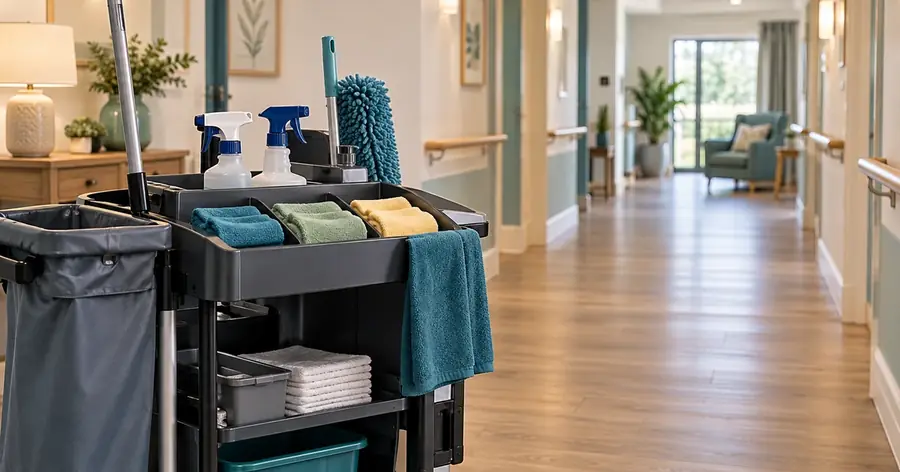
Most cleaning advice is written for offices and family houses, where a missed wipe costs little. In aged care, the same lapse can leave a gastro bug on a dining table shared by a whole wing, so the method matters more than the product on the shelf. We wrote these guides around the routines a well-run home already follows, checked them against national infection control guidance and the strengthened Quality Standards, and kept each one short enough to read on a break. If you came here looking for cleaners rather than reading material, our aged care cleaning Melbourne page explains what we do and where we work.
The guides
Which aged care cleaning guides can you read here?
There are two aged care cleaning guides on this site so far. One covers the hands-on method for surfaces, zones and spills. The other covers the paperwork side, from the strengthened Standards to procedures, schedules and a printable spot-check sheet. Both are free to read and need no sign-up.
 Guide
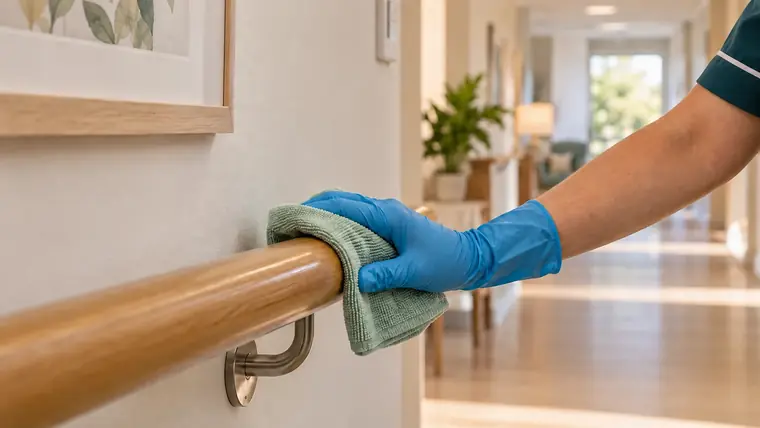
Environmental and Surface Cleaning in Aged Care
The working method for cleaning inside a home: which surfaces residents and staff touch most, how often each one needs attention, why detergent comes before disinfectant, and how to run clean and contaminated zones so germs do not ride along on a trolley. It closes with the six steps for a body-fluid spill and the product risks that matter around frail residents.
Best for: cleaners, team leads and IPC leads setting up or tightening a daily routine.
- An example frequency table for touch points, floors and shared equipment
- Zone habits a manager can check on a walk-round
- How to fold, use and launder microfibre cloths and mop heads
- What a full room clean between residents includes
- About 10 minutes
- Spill steps
 Guide
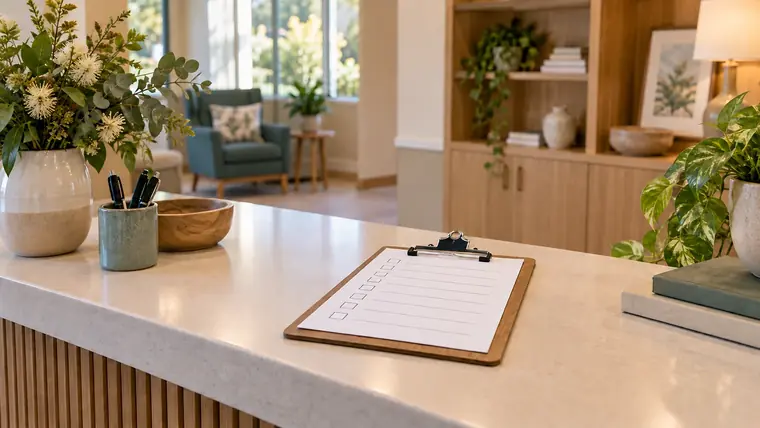
Aged Care Cleaning Standards, Procedures and Checklist
The management view of cleaning: where it sits in Standard 4 of the strengthened Quality Standards, why responsibility stays with the provider when the work is contracted out, and how a short policy grows into procedures, a timed daily schedule and weekly spot checks. The spot-check sheet fits on one A4 page and has its own print button.
Best for: facility managers, quality leads and anyone preparing for an assessment visit.
- A table linking Outcomes 4.1, 4.2 and 5.2 to cleaning evidence
- Six steps that run from policy through to a yearly review
- A sample timetable showing when each area of a wing is cleaned
- A room spot-check sheet with pass or fail boxes
- About 12 minutes
- Printable sheet
Question finder
Which guide answers your question?
Questions about doing the cleaning are answered in the surface cleaning guide, and questions about planning, proving or checking it are answered in the standards guide. A few topics, outbreaks in particular, appear in both from different angles, so the table below points you to the right section.
| Your question | Guide | Look for |
|---|---|---|
| How often should handrails, call bells and bed rails be cleaned? | Surface cleaning | The example frequency table |
| What counts as a clean zone, and how is it kept that way? | Surface cleaning | Clean zone habits |
| What are the steps for a blood, urine or vomit spill? | Surface cleaning | The six spill steps |
| Which products are risky around residents living with dementia? | Surface cleaning | Product and sanitiser risks |
| Which outcomes in the Standards cover cleaning? | Standards | The outcomes table |
| What belongs in a written cleaning policy? | Standards | The policy checklist |
| At what time of day should each area be cleaned? | Standards | The daily schedule for one wing |
| Can a cleaning contractor make our home compliant? | Standards | The short answer (it cannot) |
Who they help
Who are these guides written for?
The guides are written mainly for the people who run cleaning inside residential aged care homes and retirement villages. Families arranging help for a parent at home will still find parts of them useful, but our home cleaning and funding pages answer their questions more directly.
Facility managers and IPC leads
Set frequencies and zone rules from the surface guide, then use the standards guide to put them in writing in a form your infection control lead can sign off and an assessor can follow from page to room.
Quality and compliance staff
Keep the standards guide open in the month before an assessment. It shows which records carry weight, why a sheet that admits a failure and its fix earns more trust than perfect ticks, and how to test a shift against the written procedure.
Families and older people at home
The guides describe facility routines, so not every line fits a house. For help at home, our service page covers visits, safety and keeping the same cleaner, and the funding page explains what Support at Home may pay towards.
Reading order
In what order should a facility team use them?
Read the surface cleaning guide first, because a method has to exist before anyone can write it down or check it. Then use the standards guide to record that method as procedures, fit it around residents' days and test it with regular spot checks.
- 1
Agree the method
Settle frequencies, cloth colours, zone rules and spill steps with your IPC lead.
- 2
Write it down
Turn that method into a one-page policy and plain procedures for each area.
- 3
Fit it to the day
Time each task around meals, rest and visiting so cleaning never fights care.
- 4
Check and improve
Spot-check a sample of rooms weekly, log what fails and review after outbreaks.
Teams that jump straight to step two tend to end up with procedures copied from a template that nobody on the floor recognises. Starting from what cleaners already do, then tightening it, gives you paperwork that matches the rooms an assessor actually walks into.
How we check
How do we keep these guides accurate?
Every fact in these guides is checked against the body that sets it: national infection control guidance, the Aged Care Quality and Safety Commission, and Victorian health advice. Each guide shows the month it was last reviewed, and rules and outcome numbers are re-checked at least every six months.
National guidance
Detergent-first cleaning, touch-point frequencies and spill handling follow the NHMRC infection control guidelines for healthcare, the reference most Australian homes build their own rules on.
The regulator's own pages
Outcome numbers and what assessors look for are taken from the Commission's Standard 4 pages rather than from second-hand summaries, which often still quote the older standards.
State health advice
Where a task depends on local advice, such as mixing chlorine to the right strength, the guides point to the Victorian Department of Health and its chlorine dilutions calculator.
What we leave out is deliberate. The guides name no product brands, quote no prices and never suggest that a cleaning company can make a provider compliant, because under the Standards that duty stays with the provider. If you spot something out of date, tell us through the contact page and we will check it against the source.
Beyond the guides
When should you stop reading and bring in cleaners?
Bring in cleaners when the guides describe a routine your team cannot staff, when the same rooms fail spot checks week after week, or when an outbreak calls for extra hours your roster cannot cover. For a parent living at home, the trigger is simpler: cleaning has become unsafe or tiring.
Not sure which one you need? Describe your home or facility and we will reply with a plan and a price, starting with a free walk-through for facilities. You can get a quote without committing to anything.
Book a free site walkFAQ